Product Overview
Custom CNC copper turning produces precision cylindrical components from copper materials according to customer engineering drawings and specifications. Utilizing CNC turning centers and Swiss-type automatic lathes, manufacturers machine custom parts featuring external profiles, internal bores, threads, grooves, shoulders, and complex internal geometries.
Copper is valued for its high electrical and thermal conductivity, but its ductility and soft cutting behavior present distinct manufacturing challenges. Tool geometry, cutting parameters, workholding methods, and chip evacuation must be engineered specifically for the selected material grade and part geometry to ensure dimensional stability, precise surface finishes, and controlled burr formation.
Custom copper turned parts support applications in electrical power equipment, thermal management systems, telecommunications, automotive electronics, and industrial machinery. Production requirements are defined by engineering drawings, material specifications, tight dimensional tolerances, surface roughness values, and final service environments.
-
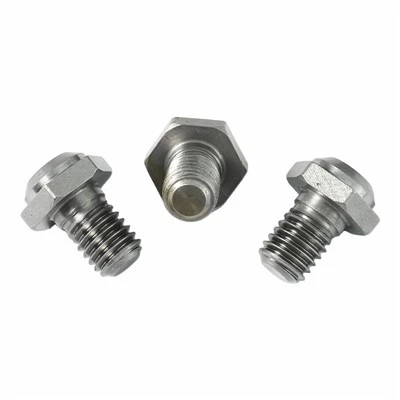
![Copper Metal Turning]() Copper Metal TurningWe use C36000 brass, known for its excellent machinability and stable performance in precision manufacturing.. • Outer diameter tolerance: ±0.01 mm. • Length tolerance: ±0.02 mm. • Thread inspection:
-
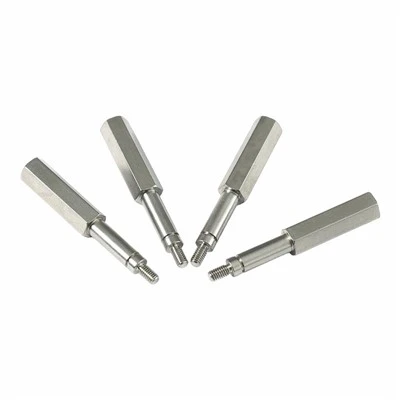
![Copper Turning Parts]() Copper Turning PartsWe specialize in exporting copper turning parts, delivering high-quality and cost-effective precision metal components. With nearly 20 years of experience in precision hardware manufacturing, we
-
![CNC Copper Turning Parts]() CNC Copper Turning PartsThis valve core is manufactured using C36000 brass or H59 brass, with alternative materials available upon request to meet different application requirements.
-
![Copper CNC Turning Parts]() Copper CNC Turning PartsWe are a manufacturing factory specializing in copper CNC turning parts, with a core focus on producing various precision copper components using CNC lathes.
-
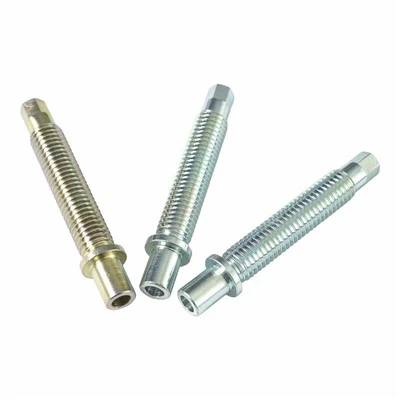
![Plated Copper Turned Parts]() Plated Copper Turned PartsWe specialize in the mass production of hex copper nuts and precision plated copper turned parts, using high-quality C36000 free-cutting brass bars combined with professionally modified automatic
-
![Brass CNC Turned Parts]() Brass CNC Turned PartsWe specialize in exporting precision copper and brass components, delivering high-quality, cost-effective solutions backed by nearly 20 years of experience in precision hardware manufacturing.


Key Features and Benefits
Electrical and Thermal Conductivity
Copper grades such as C11000 maintain natural physical properties for electrical contacts, conductive connectors, and thermal management assemblies. Actual conductivity varies by material grade and processing condition.
Drawing-Based Dimensional Control
External diameters, internal bores, and coaxiality features are machined and verified to exact drawing requirements, with achievable tolerances depending on component geometry, material, and setup.
Burr Control and Edge Finishing
Specialized cutting tool selections and designated deburring processes manage burr formation on cross-holes, internal threads, and sharp shoulders as specified in the engineering documentation.
Surface Finish Options
Machined surfaces achieve specified roughness parameters. Secondary cleaning, polishing, plating, or anti-tarnish treatments are applied according to component requirements.
Multi-Operation Consolidation
Combined turning, drilling, tapping, and live-tool milling execute multiple features in a single setup to minimize workholding transitions and positioning errors.
Materials and Technical Specifications
Material selection is determined by electrical conductivity, thermal performance, mechanical strength, machinability, and operating environment. Final material grades are designated on engineering drawings or confirmed during technical review.
Commonly Specified Copper
GradesC11000 (ETP - Electrolytic Tough Pitch Copper)
Standard grade for general electrical and thermal components where high conductivity is required.
C10100 / C10200 (Oxygen-Free Copper)
High-purity copper utilized in vacuum environments, high-frequency electronics, and hydrogen atmospheres.
Technical Parameter Matrix
|
Parameter |
Specification Range |
|
Part Diameter |
Confirmed according to machine capacity and part design |
|
Bar Stock Diameter |
Dependent on available bar-feeding equipment and raw material stock |
|
Maximum Machining Length |
Confirmed according to machine configuration and component geometry |
|
Dimensional Tolerances |
Specified on engineering drawings and evaluated during manufacturability review |
|
Surface Roughness (Ra) |
Defined according to functional and drawing requirements |
|
Thread Standards |
Metric (M), Unified (UNC/UNF), BSP, NPT, and custom threads subject to tooling capability |
|
Material Grades |
Selected copper materials subject to availability |
|
Secondary Operations |
Drilling, tapping, milling, deburring, cleaning, and specified surface finishing |
Manufacturing Capabilities
Production workflows are evaluated based on component geometry, material grade, batch size, and drawing specifications to select the appropriate equipment and machining sequence.
CNC Turning
Generates cylindrical profiles, shoulders, grooves, and internal bores according to engineering drawings.
Swiss-Type Turning
Employs guide-bushing support for slender, small-diameter components requiring high length-to-diameter ratios and strict concentricity.
Drilling, Tapping, and Milling
Integrates multi-axis live tooling to execute cross-holes, flats, and keyways within the primary machine setup.
Multi-Operation Machining
Processes complex components across multiple sides to reduce repositioning tolerances and improve positional accuracy.
Process Optimization
Selects customized cutting inserts, high-pressure coolant delivery, and specialized tool paths tailored to copper materials.

Quality Control
Inspection protocols are established in accordance with engineering drawings, material specifications, and critical dimensions.
Dimensional Inspection
Verifies diameters, lengths, and bores using Coordinate Measuring Machines (CMM), optical profile projectors, and precision micrometers.
Thread and Form Verification
Employs thread plug and ring gauges to check pitch diameter, lead, and flank angle compliance against specified standards.
Surface Finish Inspection
Measures actual Ra values using contact profilometers when roughness requirements are defined.
Material Verification
Provides raw material certificates and test reports based on procurement arrangements and order requirements.
Traceability and Documentation
Maintains inspection records and material batch identification in accordance with internal quality procedures.

Applications
Custom copper turned components operate within industrial assemblies where material properties fulfill structural, electrical, or thermal requirements.
Electrical and Power Equipment
Switchgear contact pins, high-current busbar connectors, terminal blocks, and circuit breaker components.
Thermal Management
Cold plates, heat pipe adapters, laser diode housings, and thermal sink studs.
Telecommunications and RF Equipment
Coaxial connector bodies, waveguide adapters, RF shielding ferrules, and grounding components.
Automotive and Industrial Electronics
Battery management system terminals, charging station contact pins, and sensor housings.
Industrial Machinery
Custom bushings, threaded fittings, spacers, and wear-resistant copper components.

Production operations support build-to-print requirements for OEMs, component manufacturers, and industrial buyers.
File Formats Accepted
2D PDF engineering drawings accompanied by 3D CAD models in STEP, IGES, DXF, DWG, or SolidWorks formats.
Prototype to Volume Production
Processes prototype quantities for form and fit validation prior to launching volume production batches.
Secondary Operations and Finishing
Incorporates cleaning, deburring, and electroplating services such as tin, silver, or nickel plating.
Technical Review
Evaluates critical tolerances, surface finishes, thread specifications, and inspection criteria before manufacturing commences.
Packaging and Logistics
Implements protective packaging strategies, including VCI anti-corrosion bagging and moisture barrier protection to prevent transit damage.
Frequently Asked Questions
We're well-known as one of the leading copper turning manufacturers and suppliers in China, featured by quality products and good service. Please rest assured to buy customized copper turning made in China here from our factory. Contact us for more details.
Copper Turning Parts, CNC Copper Turning Parts, Plated Copper Turned Parts