CNC Turning Services for Custom Precision Parts
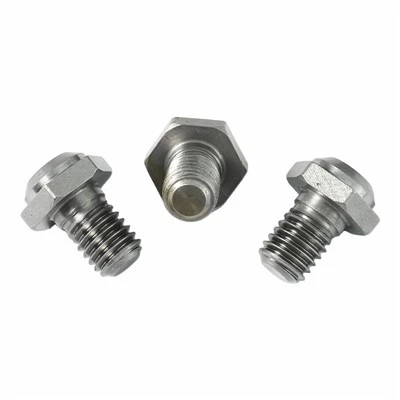
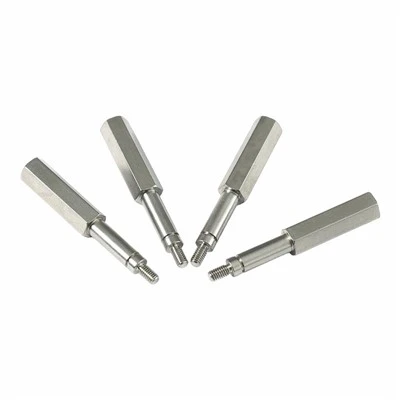
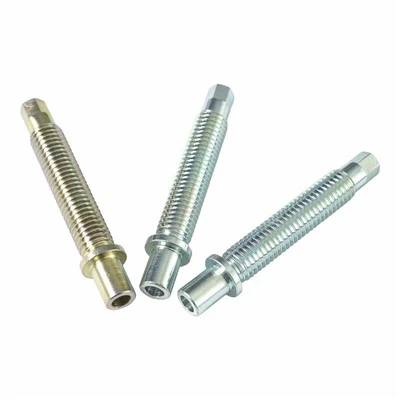
Huizhou Quanyi Precision Hardware Products Co., Ltd. provides custom CNC turning services for precision components manufactured to customer drawings and specifications. From shafts and bushings to threaded parts and custom cylindrical components, we support projects requiring specific dimensions, material grades, threads, grooves, and other machined features.
- 50+ CNC Lathes
- ISO9001 Quality System
- ±0.01–0.02 mm Tolerance
- Materials processed include aluminum, stainless steel, carbon steel, copper, and plastic.
- Prototype and high-volume production
Submit your drawings and requirements for a manufacturing review and quotation.
-
![CNC Threaded Plugs]() CNC Threaded PlugsCustom precision CNC Threaded Plugs are engineered components designed to seal, position, or close internal threaded ports across high-performance mechanical systems. Every plug is machined directly
-
![CNC Threaded Bushings]() CNC Threaded BushingsPrecision CNC Threaded Bushings are critical joining components engineered to deliver high-load structural support and precise alignment in heavy-duty mechanical systems. Machined directly from solid
-
![CNC Threaded Studs]() CNC Threaded StudsPrecision CNC threaded studs are cylindrical mechanical fasteners manufactured from solid bar stock to establish direct thread engagement and precise structural mounting. Designed for custom assembly
-
![CNC Threaded Connectors]() CNC Threaded ConnectorsPrecision-turned CNC Threaded Connectors serve as critical joining, positioning, and sealing components in complex mechanical assemblies. By integrating custom male or female thread profiles with
-
![CNC Threaded Adapters]() CNC Threaded AdaptersCNC Threaded Adapters are custom-machined mechanical connectors engineered to join, step down, or convert distinct thread standards within high-precision mechanical assemblies. Manufactured on
-
![CNC Threaded Fittings]() CNC Threaded FittingsCNC Threaded Fittings are high-precision turned connection components designed for leak-free, high-load mechanical joins. Machined via multi-axis turning and automatic lathes, these components
-
![CNC Reducing Bushings]() CNC Reducing BushingsCNC Reducing Bushings are precision-turned metal and plastic adapter sleeve components designed to connect shafts, housings, and mechanical pins of mismatched sizes. By bridging dimensional gaps
-
![CNC Shoulder Bushings]() CNC Shoulder BushingsCustom CNC Shoulder Bushings are precision-turned cylindrical components featuring an integrated shoulder that acts as a positive mechanical stop. The precision-machined shoulder accurately positions
-
![CNC Press-Fit Bushings]() CNC Press-Fit BushingsA CNC press-fit bushing is a precision cylindrical sleeve installed into a machined housing bore through controlled mechanical interference. The outer diameter creates a high-retention interference
-
![CNC Bearing Bushings]() CNC Bearing BushingsCNC Bearing Bushings are cylindrical metal sleeves precision-turned to establish accurate physical interfaces between shafts, housings, and rotating components. These components maintain tight radial
-
![CNC Guide Bushings]() CNC Guide BushingsCNC Guide Bushings serve as critical alignment hardware, ensuring accurate axial positioning and controlled linear guidance between sliding pins, shafts, and mating die plates. Manufactured using
-
![CNC Flanged Bushings]() CNC Flanged BushingsCNC Flanged Bushings are critical positioning components designed for smooth mechanical motion and secure housing retention. Each custom CNC Flanged Bushing integrates a precision-turned body with a


QY CNC Turning Materials and Available Grades
Selecting the right material for CNC turning directly impacts a part's strength, weight, corrosion resistance, machinability, surface finish, and overall production cost. Please review the categories of common metals and engineering plastics below, and confirm the specific material grade suitable for your project before placing an order.
copper alloys
carbon steel
aluminum alloys
stainless steel
plastics
|
Material Category |
Material Grades / Types |
|---|---|
|
Aluminum Alloys |
6061, 7075, 2024, 6082 |
|
Copper Alloys |
C36000, C11000, Bronze Alloys (specific grades not stated) |
|
Carbon Steel & Alloy Steel |
1008–1020 (low-carbon steel range), 1215, 1045, 4140, 12L14 |
|
Stainless Steel |
303, 304, 316, 316L, 17-4PH, 430, 440C |
|
Engineering Plastics |
POM (Delrin), PEEK, PTFE, Nylon (specific grades not stated) |
CNC Turning Capabilities and Design Guidelines
QY provides custom CNC turning solutions for precision cylindrical components manufactured to customer drawings and specifications. From shafts and bushings to threaded components, rollers, and stepped parts, machining feasibility depends on material selection, part dimensions, geometric features, and tolerance requirements.
Our engineering team can review your drawings to evaluate machining requirements, identify potential design challenges, and determine a suitable manufacturing approach.
CNC Turning Capabilities
| Design Parameter | Capability Reference | Notes |
|---|---|---|
| Maximum Turning Diameter | Up to Ø300 mm on certain product references | Subject to machine capacity and part geometry |
| Maximum Part Length | Up to 1,000 mm on certain product references | Requires confirmation for the specific part |
| Minimum Turning Diameter | Ø2–Ø10 mm across different product references | Depends on the component, material, and machining method |
| Dimensional Tolerance | ±0.02 mm on certain product references | Confirm applicability to the specific part and dimensions |
| Length Tolerance | ±0.03 mm on certain product references | Subject to drawing requirements and manufacturing feasibility |
| Tight Tolerance Requirements | Evaluated according to the drawing | Depends on dimensions, material, geometry, and inspection requirements |
How Does CNC Turning Work?
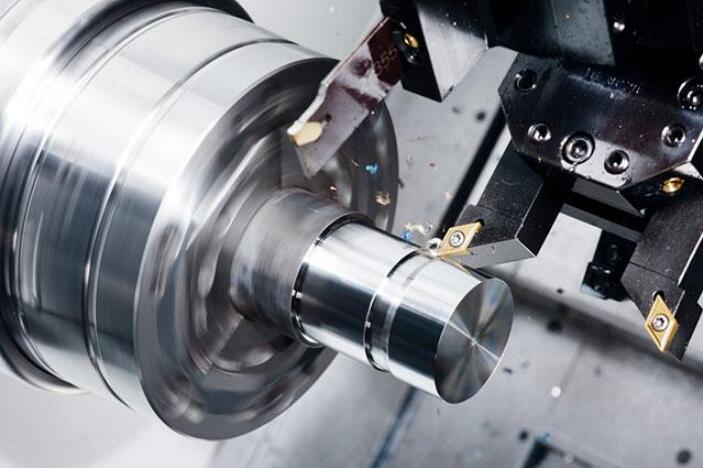
CNC turning is a subtractive manufacturing process in which a workpiece rotates while a cutting tool removes material to create the required shape and dimensions. Guided by programmed toolpaths, the machine produces features such as cylindrical surfaces, stepped diameters, grooves, and threads. Critical dimensions are checked against the engineering drawing during inspection.
01. Workpiece Rotation
The spindle rotates the workpiece while holding it securely in the chuck.
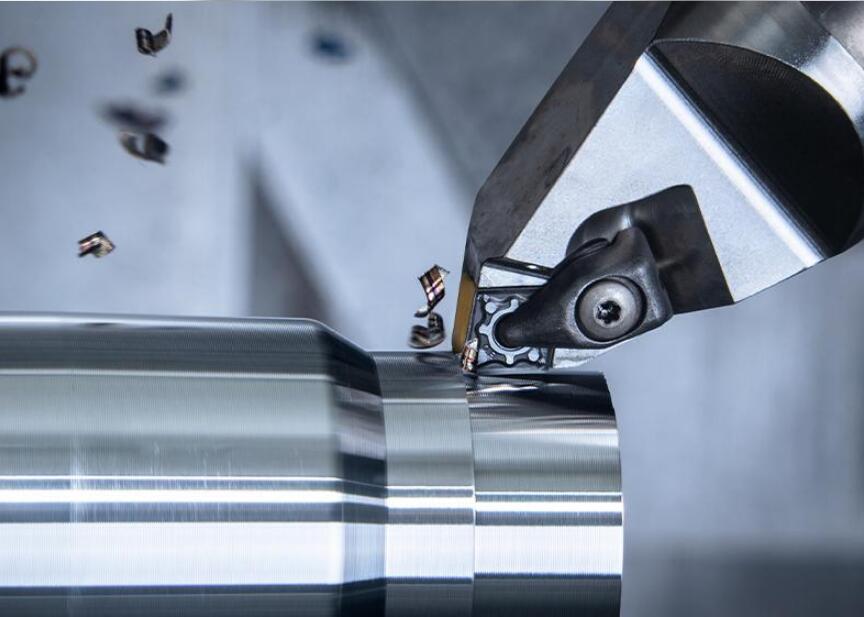
02. Controlled Cutting
The cutting tool follows a programmed path to create the required diameters, shoulders, grooves, and other turned features.
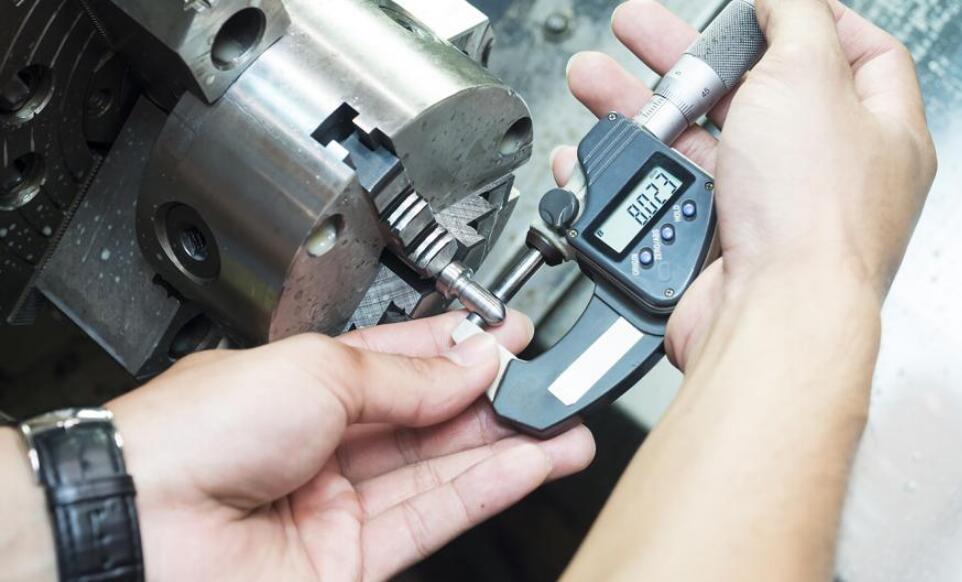
03. Dimensional Inspection
Critical dimensions are measured against the engineering drawing to verify that the finished part meets specified requirements.
CNC Turning Surface Finishes
QY offers a range of surface treatment and secondary processing options for CNC turned parts, depending on material suitability and project requirements. Available processes include anodizing, zinc plating, nickel plating, zinc-nickel alloy plating, gold plating, silver plating, tin plating, passivation, blackening, and phosphating.
Surface Treatment Options for CNC Turned Parts
| Process | Typical Purpose | Common Material Considerations |
|---|---|---|
| Anodizing | Improves surface corrosion resistance and provides decorative finishes | Aluminum alloys |
| Hard Anodizing | Creates a harder anodic oxide layer for wear resistance | Aluminum alloys |
| Zinc Plating | Provides corrosion protection | Compatible steel parts |
| Nickel Plating | Improves corrosion resistance and surface appearance; properties depend on the plating process | Compatible metals |
| Zinc-Nickel Alloy Plating | Provides enhanced corrosion protection in suitable applications | Compatible steel parts |
| Gold, Silver, and Tin Plating | Supports electrical, functional, or decorative requirements depending on the application | Compatible substrates |
| Passivation | Helps improve corrosion resistance by treating the surface | Suitable stainless steels |
| Black Oxide | Produces a black finish with limited corrosion protection unless supplemented by additional protection | Commonly used on steel |
| Phosphating | Creates a conversion coating often used as a base for oiling or painting | Suitable ferrous metals |
| Heat Treatment | Modifies material hardness and mechanical properties | Depends on the alloy and required properties |
Need a specific surface finish? Share your part drawing, material grade, operating environment, and finish requirements so the appropriate process can be evaluated.
Our CNC Turning Process
From drawing submission to final delivery, each CNC turning project is reviewed according to the part specifications, material requirements, tolerances, and order quantity.
Drawing Upload
1
>>
Engineering Assessment
2
>>
Quote Confirmation
3
>>
Production & Machining
4
>>
Quality Inspection
5
>>
Packaging & Delivery
6
CNC Turning FAQ
1. What types of parts can be manufactured using CNC turning?
CNC turning is suitable for producing cylindrical and rotational components such as shafts, bushings, sleeves, pins, rollers, threaded parts, and stepped components. The manufacturing approach depends on the part geometry, dimensional requirements, and material.
2. What materials can be used for CNC turned parts?
Common materials include aluminum alloys, stainless steel, carbon steel, copper alloys, and engineering plastics such as POM, nylon, PEEK, and PTFE. Material availability and machinability should be confirmed based on the required grade and application.
3. What tolerances can CNC turning achieve?
Achievable tolerances depend on the material, part dimensions, geometry, machining process, and inspection requirements. Please provide your engineering drawing with critical dimensions and tolerances so the manufacturing team can evaluate feasibility before quotation.
4. Can you manufacture custom CNC turned parts from drawings?
Yes, custom CNC turned parts can be evaluated based on customer-supplied engineering drawings or CAD files. Provide the required dimensions, material grade, tolerances, surface finish, and order quantity to support the engineering review.
5. What is the minimum order quantity (MOQ) for CNC turned parts?
The MOQ depends on part complexity, material requirements, production setup, and order quantity. Share your part drawing and estimated demand to confirm a suitable order quantity for your project.
6. Can I order CNC turning samples before mass production?
Sample production can be discussed before a bulk order. Provide your drawing, material specifications, and required sample quantity so the team can evaluate the sample arrangement and lead time.
7. What surface finishing options are available for CNC turned parts?
Depending on the material and application, available options may include anodizing, hard anodizing, zinc or nickel plating, passivation, black oxide, and phosphating. Other processes, such as heat treatment, may also be evaluated when required. Confirm process availability and material compatibility before ordering.
8. What information is needed to get a CNC turning quote?
For an accurate quotation, provide a 2D engineering drawing or 3D CAD file, material grade, order quantity, critical tolerances, surface finish requirements, and any secondary processing specifications. Your target delivery date and application details can also help the team evaluate the project.
We're well-known as one of the leading CNC turning manufacturers and suppliers in China, featured by quality products and good service. Please rest assured to buy customized CNC turning made in China here from our factory. Contact us for more details.