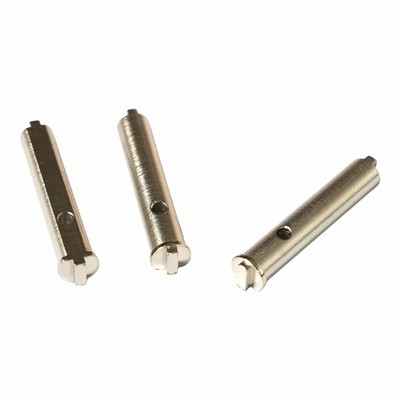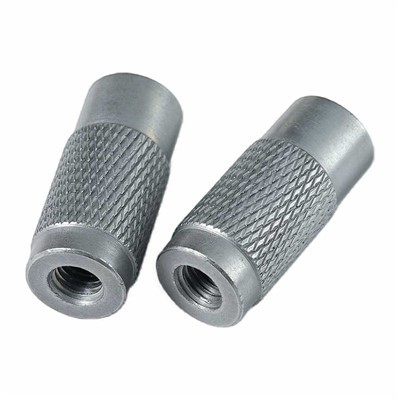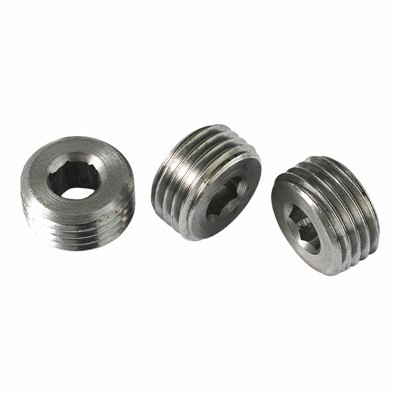

Custom CNC Motor Shafts are precision-machined rotating components engineered to deliver reliable torque transfer, balanced high-speed stability, and tight dimensional alignment in demanding drive systems.
Technical Specifications
|
Parameter |
Standard Range |
|
Length |
30 to 150 mm |
|
Diameter Tolerance |
±0.01 to ±0.02 mm |
|
Materials |
Aluminum, Stainless Steel, Carbon Steel, Copper, Engineering Plastics |
|
Primary Process |
High-Precision CNC Turning |
|
Secondary Features |
Threading, Cross-Holes, Flat Milling |
Tailored Shaft Profiles
Stepped Diameters: Turned to exact prints for multi-stage bearing and component placement.
Bearing Seats: Machined with controlled surface finishes to ensure precise friction-free fit.
Shoulders & Grooves: Positioned accurately for axial retaining rings and mechanical stops.
Material Selection Options
Selected for structural rigidity and high torque transmission capability.
Applied in environments requiring superior corrosion protection.
Utilized to reduce inertia and lower overall rotational weight.
Chosen for non-conductive, low-noise, and lightweight applications.
Primary Turning Operations
Profile Turning: Forms stepped diameters, radii, and chamfers in one continuous setup.
Concentricity Control: Holds strict rotational alignment along the entire shaft length.
Journal Finishing: Prepares smooth mating surfaces for precision bearing integration.
Secondary Machining Features
Keyways & Flats:
Milled to transfer rotational torque cleanly to pulleys and gears.
Radial Cross-Holes:
Drilled precisely for set screws, pin connections, or lubrication paths.
Precision Threading:
Machined internally or externally for positive axial fastening.
Functional Surface Finishing
Anodizing & Passivation: Protects aluminum and stainless components against atmospheric wear.
Electroplating & Oxide: Adds surface hardness and corrosion resistance while maintaining tolerance limits.
Quality & Inspection Focus
Dynamic Balance Checks:
Reduces operational vibration during high-RPM rotation.
Dimensional Verification:
Measures concentricity, runout, and journal limits against drawings.
Industrial Drive Applications
Electric Motors: Core rotor shafts and drive output extensions for high-efficiency motors.
Gearboxes & Reducers: Input and output shafts built for power transmission mechanisms.
Pumps & Actuators: Custom rotating shafts for fluid control systems and automated drives.
RFQ Submission Criteria
2D Prints & 3D Models:
Step, IGES, or PDF files showing dimensions and feature locations.
Material & Volume Specs:
Metal or plastic grades along with target order quantities.
Finish & Tolerance Notes:
Surface roughness limits, plating specs, and critical fits.
Scalable Production Capacity
Prototyping:
Rapid turning for engineering validation and fit testing.
Volume Manufacturing:
Consistent turned output for batch and mass production orders.
FAQ
Hot Tags: cnc motor shafts, China cnc motor shafts manufacturers, suppliers, factory, CNC Rotary Shaft Bushings