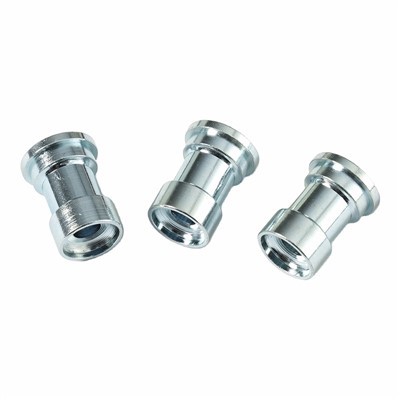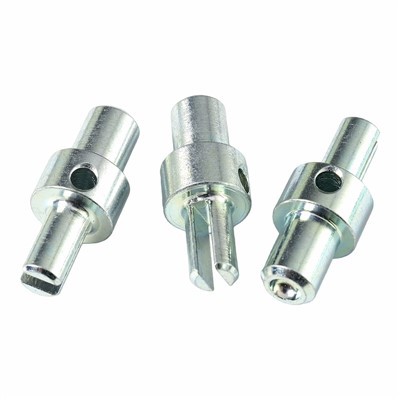

Precision-machined custom CNC pump shafts engineered for demanding pump assemblies. Each shaft features tightly controlled stepped diameters, journals, keyways, external threads, and functional flats tailored to your exact rotary power transmission requirements. Manufactured directly from customer 2D drawings, 3D CAD models, or physical samples to ensure seamless integration into OEM equipment.
Key Specifications
|
Feature Parameter |
Standard Specification Range |
|
Material Grades |
Stainless Steel (304, 316L, 17-4PH), Carbon Steel (4140, 1045), Aluminum (6061-T6, 7075-T6), Brass (C36000) |
|
Shaft Diameter Range |
8.00 mm to 120.00 mm |
|
Maximum Length |
1000.00 mm |
|
Standard Tolerance |
ISO 2768-mK / ISO 2768-fH |
|
Journal Fit Tolerance |
Up to h5 / g6 (±0.005 mm) |
|
Surface Finish (Ra) |
Turned: Ra 1.6 µm / Precision Ground: Ra 0.4 µm |
|
Concentricity / Runout |
≤ 0.010 mm TIR |
|
Thread Precision |
Class 6g / UNC & UNF 2A |
|
Hardness Processing |
Induction Hardened HRC 58-62 / Through Hardened HRC 28-32 |
|
Applicable Standards |
DIN 6885 Keyways, ISO 286 Fit Tolerances |
Custom Shaft Geometry Options
Stepped Shaft Profiles: Engineered multi-diameter transitions to seat impellers, mechanical seals, couplings, and retaining rings.
Bearing Journals: Precision-ground journal diameters held to tight tolerances for ideal bearing interference or slip fits.
Keyways & Drive Features: Custom keyways, machined flats, cross holes, and external threads produced in a single manufacturing sequence to prevent alignment errors.
Targeted Material Performance
Provides superior corrosion resistance and dimensional stability in harsh liquid or chemical environments.
Delivers high structural strength and durability for high-torque industrial pumping applications.
Reduces rotational inertia in lightweight pump assemblies where operating conditions permit lower weight.
Selected for specialized chemical resistance, non-sparking properties, or low-friction bearing surfaces.
Manufacturing Capabilities & Process Control
Primary CNC Turning: Direct machining of all rotational features, shoulders, and sealing grooves ensures concentricity across the entire shaft length.
Integrated Secondary Machining: Automated cross-drilling, keyway milling, and thread chasing eliminate secondary setup errors and accelerate production output.
Strict Dimensional Verification: Shaft geometry, runout, and surface profiles are verified against original drawing specifications using precision measuring instruments.
Application Specific Tolerances
Journal & Seal Diameters:
Define distinct tolerances for bearing journal fits and mechanical seal locations to prevent premature wear.
Rotational Alignment:
Specify runout, concentricity, and axial straightness limits to eliminate shaft vibration at high operating speeds.
Functional Surface Roughness: Threading:
Designate precise surface finishes (Ra) for critical sealing zones rather than applying a blanket roughness value across the entire part.
Supported Industrial Applications
Centrifugal Pumps: High-precision rotary shafts designed to support balanced impellers, mechanical seals, and drive connections.
Industrial Water Pumps: Reliable replacement and OEM pump components machined to withstand continuous fluid pressure and load variations.
Process & Fluid Systems: Custom-finished shafts built to resist aggressive fluids and thermal expansion in chemical handling equipment.
Legacy Equipment Maintenance: Precise reverse engineering and production of obsolete shafts from worn samples or vintage technical drawings.
How to Select the Correct Shaft Parameters
Match Operating Environment: Select stainless steel for corrosive fluids or high-strength carbon steel for severe torque demands.
Identify Critical Interface Fits: Mark key journal diameters, seal locations, and coupling drives as tight-tolerance control points.
Specify Geometric Controls: Detail allowable runout, straightness, and surface finish metrics to protect surrounding bearings and seals during operation.
Quality Inspection Focus
Full Dimensional Audits:
Comprehensive checking of overall length, step diameters, thread pitches, and groove locations.
Feature Integrity Checks:
Verification of keyway depth, cross-hole positions, and drive flat symmetry against original print requirements.
Surface Condition Review:
Inspection of applied surface treatments and sealing surface smoothness to confirm compliance with order specifications.
Submitting a Request for Quotation
Technical Drawings: Attach a 2D PDF drawing detailing tolerances, threads, and surface finish callouts alongside a 3D STEP file.
Material Grade & Volume: Indicate the exact alloy required, target prototype or production batch sizes, and delivery timelines.
Special Requirements: Highlight critical bearing fits, heat treatment, surface plating, or custom inspection requests up front.
FAQ
Hot Tags: cnc pump shafts, China cnc pump shafts manufacturers, suppliers, factory, CNC Rotary Shaft Bushings