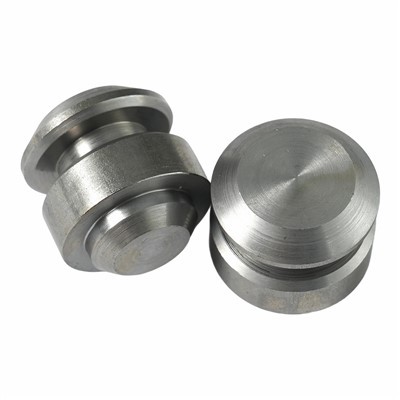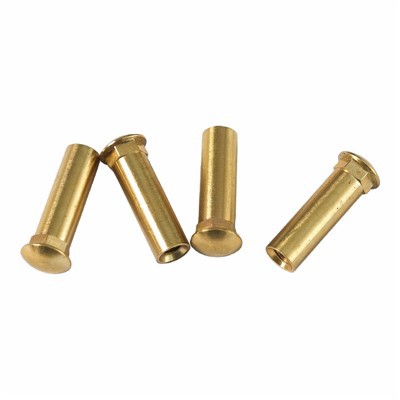

As a supplier of CNC Turning Steel Parts, I understand the critical importance of ensuring the straightness of these components. Straightness is not just a matter of aesthetics; it directly impacts the functionality and performance of the parts in various applications. In this blog post, I will share some key strategies and best practices to guarantee the straightness of CNC turning steel parts.
Understanding the Basics of Straightness in CNC Turning
Before delving into the methods of ensuring straightness, it's essential to understand what straightness means in the context of CNC turning. Straightness refers to the condition where a line or an axis of a part is perfectly straight within a specified tolerance. In CNC turning, this typically applies to the longitudinal axis of the turned part. Any deviation from straightness can lead to issues such as misalignment, poor fit, and reduced performance.
Material Selection
The choice of material plays a significant role in achieving straightness. High - quality carbon steel is a popular choice for CNC turning due to its excellent machinability and mechanical properties. When selecting carbon steel for turning, ensure that it has a uniform grain structure and consistent hardness. Inconsistencies in the material can cause uneven cutting forces during turning, leading to deviations in straightness. For more information on Carbon Steel Parts, you can visit our website.
Machine Setup and Calibration
Proper machine setup is crucial for achieving straightness in CNC turning. The lathe must be accurately leveled and aligned. Any misalignment in the machine can result in the part being turned at an angle, leading to poor straightness. Regular calibration of the machine's axes is also necessary. This includes checking the accuracy of the X, Y, and Z axes to ensure that they move precisely as programmed. A well - calibrated machine will produce parts with better straightness and dimensional accuracy.
Cutting Tools
The selection and condition of cutting tools are vital for maintaining straightness. High - quality cutting tools with sharp edges are essential for clean and precise cuts. Dull or worn - out tools can cause chatter, vibration, and uneven cutting, which can negatively affect the straightness of the part. It's important to choose the right type of cutting tool for the specific material and turning operation. For example, carbide cutting tools are often preferred for their high hardness and wear resistance when turning steel parts.
Cutting Parameters
Optimizing cutting parameters is another key factor in ensuring straightness. Parameters such as cutting speed, feed rate, and depth of cut need to be carefully selected. A too - high cutting speed can cause excessive heat, which may lead to material deformation and affect straightness. On the other hand, a very low cutting speed may result in poor surface finish and longer machining times. The feed rate should be set to ensure a smooth and consistent cut, while the depth of cut should be appropriate for the material and the tool being used.


Workholding
Proper workholding is essential to prevent the part from moving or vibrating during the turning process. A secure and stable workholding device, such as a chuck or a collet, should be used. The workholding device should be able to hold the part firmly without causing any distortion. Additionally, the part should be centered accurately in the workholding device to ensure that it is turned symmetrically and straight.
Inspection and Quality Control
Regular inspection during the machining process is crucial for detecting any issues with straightness early on. This can be done using various measuring tools such as micrometers, calipers, and straightedges. In addition to in - process inspection, a final inspection should be carried out once the part is machined. This ensures that the part meets the required straightness specifications. If any deviations are found, corrective actions can be taken, such as adjusting the cutting parameters or re - machining the part.
Heat Treatment
Heat treatment can also have an impact on the straightness of CNC turning steel parts. Improper heat treatment can cause internal stresses in the part, leading to warping and distortion. Therefore, it's important to follow a proper heat treatment process. For some applications, stress - relieving heat treatment may be required to reduce internal stresses and improve straightness.
Post - Machining Operations
After the turning process, additional post - machining operations such as grinding or honing can be used to improve the straightness of the part. These operations can remove any minor deviations and provide a more precise and straight surface. However, it's important to note that these operations should be carefully planned and executed to avoid over - machining or introducing new issues.
Black Nitride Treatment
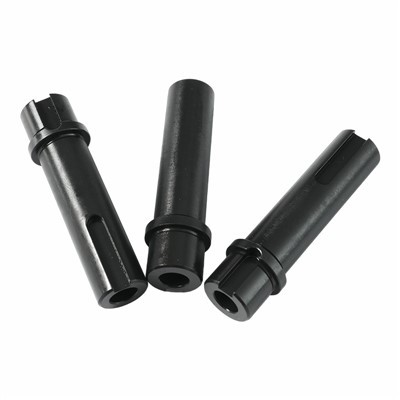
For some applications, black nitride treatment can be applied to the CNC turning steel parts. This treatment not only provides a hard and wear - resistant surface but can also help in maintaining the straightness of the part. The black nitride layer can act as a protective barrier, reducing the risk of deformation and improving the overall performance of the part. For more details on Black Nitride Steel Components, please visit our website.
Conclusion
Ensuring the straightness of CNC turning steel parts is a complex process that requires careful attention to various factors, including material selection, machine setup, cutting tools, cutting parameters, workholding, inspection, heat treatment, and post - machining operations. By following these best practices, we can produce high - quality CNC turning steel parts that meet the strictest straightness requirements.
If you are in the market for CNC Machined Parts, we invite you to contact us for a detailed discussion about your specific requirements. Our team of experts is ready to assist you in selecting the right solutions and ensuring the highest quality of your parts.
References
- Smith, J. (2018). CNC Machining Handbook. Publisher Name.
- Johnson, R. (2020). Advanced Turning Techniques. Another Publisher.
- Brown, A. (2019). Quality Control in CNC Manufacturing. Third Publisher.