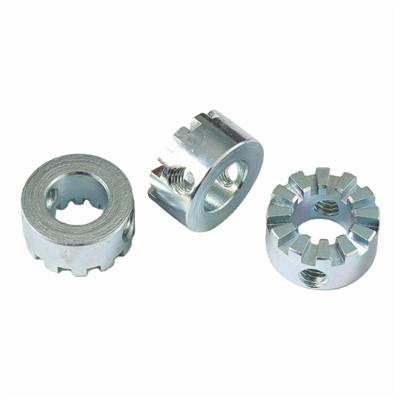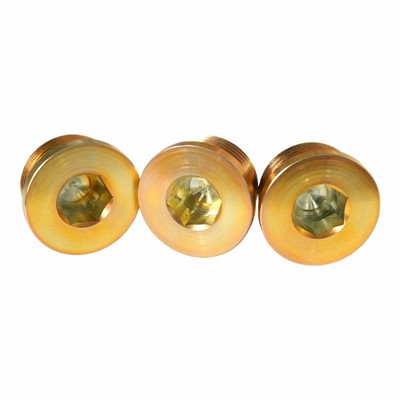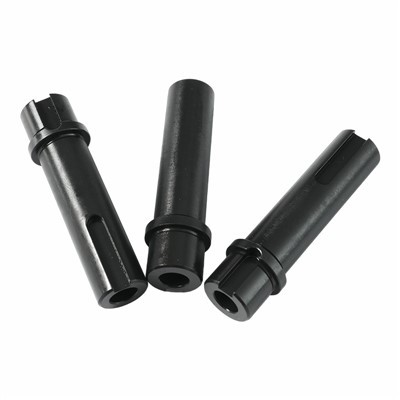

Hey there! As a supplier of Small Turned Parts, I often get asked whether these little components can hold up in corrosive environments. It's a super important question, especially for industries where corrosion is a constant headache. So, let's dive right in and explore this topic.
First off, what are Small Turned Parts anyway? Well, they're the tiny yet crucial pieces that are made through a machining process called turning. Think of them as the unsung heroes in all sorts of machinery and equipment. You can check out more about these Small Turned Parts on our website. These parts come in all shapes and sizes, and they're used in a wide range of applications, from automotive to aerospace, and even in household appliances.


Now, let's talk about corrosive environments. Corrosion is basically the deterioration of a material, usually metal, due to chemical reactions with its surroundings. It can be caused by things like moisture, chemicals, and even just the air we breathe. Some common examples of corrosive environments include coastal areas where saltwater is in the air, industrial settings with chemicals floating around, and even some food processing plants.
So, can our Small Turned Parts handle these tough conditions? The answer is, it depends. There are a few factors that come into play when determining whether a small turned part can be used in a corrosive environment.
Material Selection
The first and most important factor is the material of the part. Different materials have different levels of resistance to corrosion. For example, stainless steel is a popular choice because it contains chromium, which forms a protective layer on the surface of the metal, preventing corrosion. Other materials like aluminum and titanium also have good corrosion resistance. On the other hand, carbon steel is more prone to corrosion, but it can be treated to improve its resistance.
If you're looking for Precision Machining Small Parts, we offer a variety of materials to choose from. We can help you select the right material based on your specific requirements and the environment in which the parts will be used.
Surface Treatment
Another way to enhance the corrosion resistance of small turned parts is through surface treatment. There are several types of surface treatments available, such as plating, coating, and passivation.
Plating involves depositing a thin layer of metal, such as zinc or nickel, on the surface of the part. This layer acts as a barrier between the metal and the corrosive environment. Coating, on the other hand, can be a polymer or a ceramic material that is applied to the surface of the part. It provides an additional layer of protection against corrosion. Passivation is a chemical process that removes free iron from the surface of the metal, making it more resistant to corrosion.
Design Considerations
The design of the small turned part can also affect its corrosion resistance. For example, parts with sharp edges or corners are more likely to experience corrosion because they can trap moisture and chemicals. By designing parts with smooth surfaces and rounded edges, we can reduce the risk of corrosion.
In addition, the way the parts are assembled and installed can also impact their corrosion resistance. For example, if parts are not properly sealed or if there are gaps between them, moisture and chemicals can seep in and cause corrosion.
Real - World Examples
Let's take a look at some real - world examples to see how small turned parts can be used in corrosive environments. One example is the Metal Shelf Support Pin. These pins are often used in industrial settings where they may be exposed to chemicals and moisture. By using stainless steel and applying a protective coating, these pins can withstand the corrosive environment and provide long - lasting support.
Another example is in the automotive industry. Small turned parts are used in various components of a car, such as the engine and the transmission. In coastal areas, where saltwater can cause corrosion, these parts need to be made from corrosion - resistant materials and treated with appropriate surface treatments to ensure their durability.
Testing and Quality Assurance
Before we supply any small turned parts, we conduct rigorous testing to ensure their corrosion resistance. We use various methods, such as salt spray testing, to simulate corrosive environments and evaluate how the parts perform. This helps us to identify any potential issues and make necessary adjustments to the material, surface treatment, or design.
We also have a strict quality assurance process in place. Our team of experts inspects each part to ensure that it meets the highest standards of quality and corrosion resistance. This way, you can be confident that the parts you receive will perform well in your specific application.
Conclusion
So, to answer the question, yes, small turned parts can be used in corrosive environments. By carefully selecting the right material, applying appropriate surface treatments, and considering the design, we can ensure that these parts can withstand the harsh conditions.
If you're in need of small turned parts for a corrosive environment, don't hesitate to reach out. We're here to help you find the best solution for your needs. Whether you need a custom - made part or a standard one, we've got you covered. Let's start a conversation and see how we can work together to meet your requirements.
References
- ASM Handbook Volume 13A: Corrosion: Fundamentals, Testing, and Protection.
- Corrosion Engineering by Mars G. Fontana.