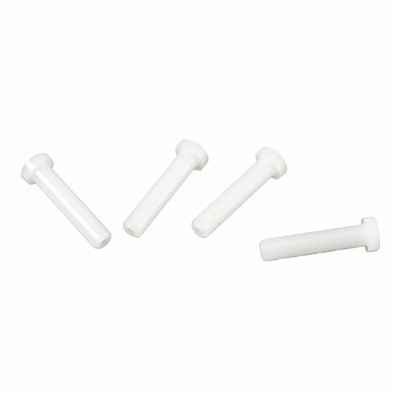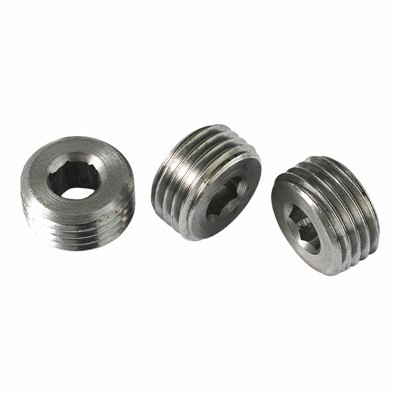

Hey there! As a supplier of POM Plastic Turning Parts, I often get asked whether these parts are easy to machine. Well, let's dive right into it and explore the ins and outs of machining POM plastic.
What is POM Plastic?
First off, let's talk a bit about what POM plastic is. POM, or polyoxymethylene, is a high - performance engineering thermoplastic. It's known for its excellent mechanical properties, such as high stiffness, low friction, and good dimensional stability. These features make it a popular choice in a wide range of industries, from automotive to consumer goods.
Machinability of POM Plastic Turning Parts
When it comes to machining, POM plastic has some really nice characteristics that make it relatively easy to work with.
1. Cutting Performance
POM plastic has a consistent and uniform structure. This means that when you're cutting it, the chips come off smoothly. Unlike some other plastics that can be gummy or stringy during machining, POM forms short, manageable chips. This is a huge advantage as it reduces the chances of chip clogging in the cutting tool, which can lead to poor surface finish and damage to the tool.
For example, when using a CNC lathe to turn POM plastic parts, the cutting edges of the tool can glide through the material with relative ease. The low friction coefficient of POM also helps in reducing the heat generated during cutting. Less heat means less wear and tear on the cutting tools, which in turn can save you money on tool replacements.
2. Dimensional Accuracy
One of the key requirements in machining is achieving high dimensional accuracy. POM plastic is great in this regard. It has low shrinkage rates, which means that once the part is machined, it retains its shape and size very well. This is crucial, especially in applications where tight tolerances are required.
Let's say you're making a small gear for a precision instrument. With POM plastic, you can machine the gear to the exact specifications you need, and it will maintain its dimensions over time. This reliability is a big plus for manufacturers who rely on consistent part quality.
3. Surface Finish
POM plastic can achieve a very good surface finish after machining. The smoothness of the surface is important for many applications, such as parts that need to slide against each other or have a good aesthetic appearance.
When using proper machining techniques and tools, you can get a mirror - like finish on POM plastic turning parts. This not only looks good but also reduces friction in moving parts, improving the overall performance of the product.
Challenges in Machining POM Plastic
However, it's not all sunshine and rainbows. There are some challenges that you might face when machining POM plastic.
1. Thermal Sensitivity
POM plastic is sensitive to heat. If too much heat is generated during machining, it can cause the material to melt or deform. This is why it's important to use proper cutting speeds, feeds, and coolant.
For instance, if you're using a high - speed cutting operation without adequate cooling, the POM plastic can start to melt around the cutting area. This will result in a poor surface finish and may even ruin the part. So, you need to be careful and adjust your machining parameters accordingly.
2. Static Electricity
Another issue is static electricity. POM plastic can build up static charges during machining, which can attract dust and debris. This can affect the surface finish and the accuracy of the part.


To combat this, you can use anti - static agents or grounding techniques. For example, you can use a conductive lubricant during machining to reduce the static charge.
Comparison with Other Plastics
Let's compare POM plastic with some other common plastics used in machining, like PEEK.
PEEK Machined Parts are also very popular in high - performance applications. PEEK has even higher heat resistance and mechanical strength than POM. However, it's also more difficult to machine.
PEEK requires more specialized cutting tools and higher cutting forces. The chips are also more difficult to manage compared to POM. On the other hand, POM is more cost - effective and easier to machine, making it a great choice for many general - purpose applications.
Our Experience as a POM Plastic Turning Parts Supplier
As a supplier of POM Plastic Turning Parts, we've had a lot of experience in machining these parts. We've developed some best practices to overcome the challenges and ensure high - quality products.
We use state - of - the - art CNC machines that are programmed to optimize the cutting parameters for POM plastic. Our operators are well - trained to handle the material and are aware of the potential issues, such as heat generation and static electricity.
We also have a strict quality control process in place. Every part is inspected for dimensional accuracy and surface finish before it's shipped to the customer. This ensures that our customers get the best - quality POM plastic turning parts.
Conclusion
In conclusion, POM plastic turning parts are generally easy to machine. They offer good cutting performance, high dimensional accuracy, and a great surface finish. However, you need to be aware of the challenges, such as thermal sensitivity and static electricity.
If you're in the market for CNC Machined Plastic Parts, especially POM plastic turning parts, we'd love to have a chat with you. Whether you have a small - scale project or a large - volume order, we can provide you with high - quality parts at competitive prices. Don't hesitate to reach out for a quote or to discuss your specific requirements.
References
- "Engineering Plastics Handbook", various authors
- "Machining of Plastics: Principles and Practices", published by a leading plastics industry association