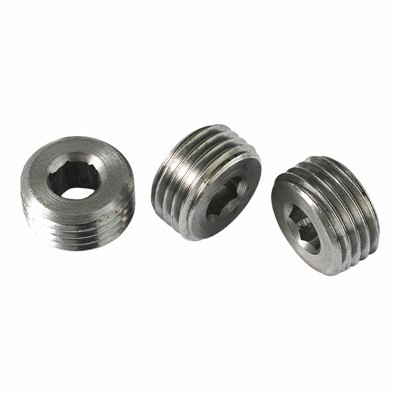

Hey there! As a supplier of Carbon Steel Parts, I often get asked about the hardness range of these parts. It's a crucial aspect, especially when it comes to choosing the right material for specific applications. So, let's dive into it and explore what the hardness range of carbon steel parts is all about.
Understanding Carbon Steel
First off, let's quickly go over what carbon steel is. Carbon steel is an alloy made primarily of iron and carbon, with small amounts of other elements like manganese, silicon, sulfur, and phosphorus. The carbon content in carbon steel plays a significant role in determining its properties, including hardness.
There are different types of carbon steel, classified based on their carbon content:
- Low - carbon steel: Contains up to 0.3% carbon. It's relatively soft and ductile, making it easy to form and weld.
- Medium - carbon steel: Has a carbon content ranging from 0.3% to 0.6%. It offers a good balance between strength and ductility.
- High - carbon steel: Contains more than 0.6% carbon. It's harder and stronger but less ductile than low - and medium - carbon steel.
Hardness Testing Methods
Before we talk about the hardness range, it's important to understand how hardness is measured. There are several methods for testing the hardness of carbon steel parts, but the most common ones are:
- Brinell hardness test: This test involves pressing a hard ball into the surface of the material and measuring the diameter of the indentation. The Brinell hardness number (BHN) is then calculated based on the load applied and the size of the indentation.
- Rockwell hardness test: In this test, a diamond cone or a hard steel ball is pressed into the material, and the depth of the indentation is measured. The Rockwell hardness number is determined by the difference in the depth of the indentation before and after the application of a major load.
- Vickers hardness test: Similar to the Brinell test, but it uses a pyramid - shaped indenter. The Vickers hardness number (HV) is calculated based on the load applied and the area of the indentation.
Hardness Range of Carbon Steel Parts
The hardness range of carbon steel parts can vary widely depending on the type of carbon steel, the heat treatment process, and the specific application.
Low - Carbon Steel
Low - carbon steel parts typically have a relatively low hardness. The Brinell hardness of low - carbon steel can range from about 100 to 150 BHN. In terms of Rockwell hardness, it usually falls in the range of B70 - B90 on the Rockwell B scale. This low hardness makes low - carbon steel suitable for applications where formability and weldability are important, such as in the manufacturing of Small Turned Parts.
Medium - Carbon Steel
Medium - carbon steel parts have a higher hardness compared to low - carbon steel. The Brinell hardness of medium - carbon steel can range from 150 to 250 BHN. On the Rockwell scale, it can be in the range of C20 - C35 on the Rockwell C scale. This increased hardness makes medium - carbon steel suitable for applications that require a good balance of strength and ductility, like Precision Machined Components.
High - Carbon Steel
High - carbon steel parts are the hardest among the three types. The Brinell hardness of high - carbon steel can range from 250 to 600 BHN or even higher, depending on the heat treatment. On the Rockwell scale, it can be in the range of C40 - C65 on the Rockwell C scale. High - carbon steel is used in applications where high strength and wear resistance are required, such as in the production of cutting tools and springs.
Heat Treatment and Hardness
Heat treatment is a crucial process that can significantly affect the hardness of carbon steel parts. By heating and cooling the steel in a controlled manner, we can alter its microstructure and, consequently, its hardness.
- Annealing: This is a heat treatment process where the steel is heated to a specific temperature and then slowly cooled. Annealing softens the steel, reducing its hardness and increasing its ductility. It's often used to relieve internal stresses and improve machinability.
- Quenching: Quenching involves heating the steel to a high temperature and then rapidly cooling it, usually in water, oil, or air. This process hardens the steel by forming a martensitic microstructure. However, quenching can also make the steel brittle, so it's often followed by tempering.
- Tempering: Tempering is a process where the quenched steel is heated to a lower temperature and then cooled slowly. This reduces the brittleness of the steel while maintaining a high level of hardness.
Applications Based on Hardness
The hardness of carbon steel parts determines their suitability for different applications.


- Soft carbon steel parts: With their low hardness and high ductility, soft carbon steel parts are ideal for applications where formability is key. They are commonly used in the automotive industry for components like body panels and frames, as well as in the construction industry for structural members.
- Medium - hard carbon steel parts: These parts offer a good balance of strength and ductility, making them suitable for a wide range of applications. They are often used in machinery, such as gears, shafts, and axles, where they need to withstand moderate loads and stresses.
- Hard carbon steel parts: Hard carbon steel parts are used in applications where high wear resistance and strength are required. They are commonly found in cutting tools, dies, and springs, where they need to maintain their shape and performance under harsh conditions.
Why Choose Our Carbon Steel Parts
As a supplier of Carbon Steel Parts, we take pride in offering high - quality products with the right hardness for your specific needs. We have a team of experts who understand the intricacies of carbon steel and can help you choose the best material and heat treatment process for your application.
We use state - of - the - art manufacturing techniques and equipment to ensure that our carbon steel parts meet the highest standards of quality and precision. Whether you need small turned parts or precision machined components, we can provide you with the products you need, tailored to your exact specifications.
Contact Us for Procurement
If you're in the market for carbon steel parts and want to discuss your requirements, don't hesitate to get in touch. We're here to answer any questions you may have and help you find the perfect solution for your project. Whether it's about the hardness range, the manufacturing process, or the cost, we're happy to have a chat and guide you through the procurement process.
References
- ASM Handbook, Volume 1: Properties and Selection: Irons, Steels, and High - Performance Alloys.
- Metals Handbook Desk Edition, 2nd Edition.
- Fundamentals of Materials Science and Engineering: An Integrated Approach, by William D. Callister, Jr. and David G. Rethwisch.