
Elongation is a critical mechanical property that significantly impacts the performance and application of stainless steel turned parts. As a trusted supplier of stainless steel turned parts, we understand the importance of this characteristic and its implications for various industries. In this blog, we will delve into the concept of elongation in stainless steel turned parts, exploring its definition, measurement, influencing factors, and practical significance.
What is Elongation?
Elongation, in the context of materials science, refers to the ability of a material to deform plastically under tensile stress before fracture. It is typically expressed as a percentage of the original length of the material. When a stainless steel turned part is subjected to a tensile force, it will initially deform elastically, meaning it will return to its original shape once the force is removed. However, as the force increases, the material will begin to deform plastically, and this deformation is permanent. The elongation of a stainless steel turned part is a measure of how much it can stretch before it breaks.
Measuring Elongation
The elongation of stainless steel turned parts is measured through a tensile test. In this test, a sample of the stainless steel is placed in a testing machine and subjected to a gradually increasing tensile force until it fractures. The test machine records the applied force and the corresponding elongation of the sample. The elongation is then calculated as the percentage increase in the length of the sample from its original length to the length at the point of fracture.
The standard method for conducting tensile tests is defined by various international standards, such as ASTM E8/E8M in the United States and ISO 6892-1 globally. These standards provide detailed guidelines on the test specimen preparation, testing procedures, and calculation methods to ensure accurate and consistent results.
Factors Influencing Elongation
Several factors can influence the elongation of stainless steel turned parts. These include:
1. Stainless Steel Grade
Different grades of stainless steel have different chemical compositions and microstructures, which can significantly affect their elongation properties. For example, austenitic stainless steels, such as 304 and 316, generally have higher elongation compared to ferritic and martensitic stainless steels. This is because austenitic stainless steels have a face-centered cubic (FCC) crystal structure, which allows for more plastic deformation before fracture.
2. Heat Treatment
Heat treatment processes, such as annealing, quenching, and tempering, can alter the microstructure of stainless steel and thus affect its elongation. Annealing, for instance, can relieve internal stresses and improve the ductility of the material, resulting in higher elongation. On the other hand, quenching and tempering can increase the hardness and strength of the material but may reduce its elongation.
3. Manufacturing Process
The manufacturing process used to produce stainless steel turned parts can also impact their elongation. For example, machining operations, such as turning, milling, and grinding, can introduce residual stresses and surface defects in the parts, which can reduce their elongation. Additionally, the quality of the raw material and the precision of the machining process can also affect the elongation properties of the parts.
4. Environmental Conditions
The environmental conditions in which stainless steel turned parts are used can also influence their elongation. For example, exposure to high temperatures, corrosive environments, and cyclic loading can cause the material to degrade over time, leading to a decrease in its elongation.
Practical Significance of Elongation in Stainless Steel Turned Parts
The elongation of stainless steel turned parts has several practical implications for their performance and application. These include:

1. Ductility and Formability
Elongation is a measure of the ductility of a material, which is the ability of the material to be deformed without breaking. A high elongation value indicates that the stainless steel turned part can be easily formed into various shapes without cracking or fracturing. This is particularly important in applications where the parts need to be bent, stretched, or otherwise deformed during the manufacturing process or in service.
2. Fatigue Resistance
Elongation also plays a crucial role in the fatigue resistance of stainless steel turned parts. Fatigue is the process by which a material fails under cyclic loading. A material with high elongation is more likely to withstand cyclic loading without cracking or fracturing, as it can absorb and dissipate the energy generated by the cyclic stress.
3. Impact Resistance
In applications where stainless steel turned parts are subjected to impact loading, such as in automotive and aerospace industries, elongation is an important factor in determining the impact resistance of the parts. A material with high elongation can deform plastically under impact, absorbing the energy of the impact and preventing the part from fracturing.
4. Weldability
Elongation is also related to the weldability of stainless steel turned parts. A material with high elongation is more likely to be weldable, as it can accommodate the stresses and strains generated during the welding process without cracking.
Our Expertise in Stainless Steel Turned Parts
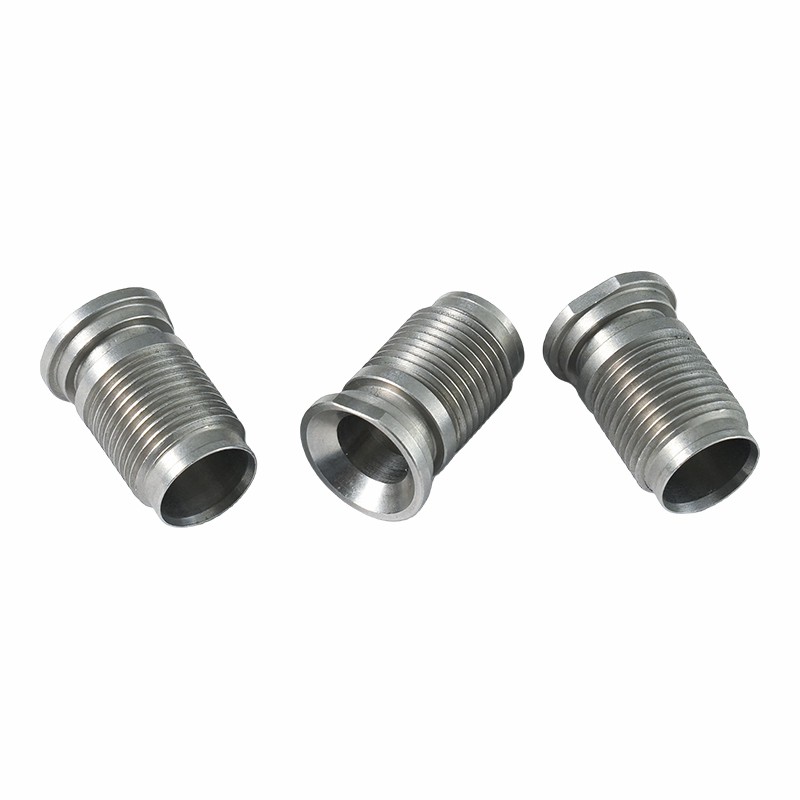
As a leading supplier of Turning Stainless Steel, we have extensive experience in producing high-quality parts with excellent elongation properties. We use advanced manufacturing techniques and state-of-the-art equipment to ensure the precision and consistency of our products. Our team of experts is dedicated to providing customized solutions to meet the specific requirements of our customers.
We offer a wide range of Turned Metal Parts and Stainless Steel CNC Parts in various grades and sizes. Our products are widely used in industries such as automotive, aerospace, medical, and electronics. We are committed to providing our customers with the highest level of quality and service, and we strive to exceed their expectations.
Contact Us for Your Stainless Steel Turned Parts Needs
If you are in need of high-quality stainless steel turned parts with excellent elongation properties, we invite you to contact us. Our team of experts will be happy to discuss your requirements and provide you with a customized solution. We look forward to working with you and helping you achieve your goals.
References
- ASTM E8/E8M - Standard Test Methods for Tension Testing of Metallic Materials.
- ISO 6892-1 - Metallic materials — Tensile testing — Part 1: Method of test at room temperature.